
From Fighter Pilot to Author: A Life of War, Danger and Adventure in the Skies
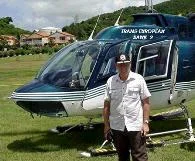
You've faced enemy fighter jets in the Falklands War, flown through some of the most dangerous skies in the world, and lived through experiences most people only encounter in Hollywood films. What is the one thing about your extraordinary life that readers would find hardest to believe?
That it's all true.
At 20 years old, I was flying a Sea Harrier fighter jet into combat in the Falklands War, where the difference between life and death could be measured in seconds. I shot down three enemy aircraft, lost friends, and learned very quickly that courage isn't the absence of fear — it's doing what needs to be done despite it.
But the Falklands were only the beginning.
My flying career subsequently took me into the dangerous world of the Colombian drug wars, through the unpredictable skies of Africa, into the demanding world of experimental test flying, and eventually into commercial aviation. Along the way, I encountered extraordinary people, impossible situations, moments of sheer terror, and enough absurdity to fill several lifetimes.
People sometimes ask whether I've exaggerated the stories in my books. The truth is quite the opposite. Some of the things that actually happened are so extraordinary that, had I invented them, nobody would believe me.
That's why I write. Not to glorify war or danger, but to take readers into a world very few people have experienced — and to tell them what it really felt like to be there.
I don't need to invent adventures. I've spent a lifetime surviving them.
You've cheated death in aerial combat, flown into places most people would never dare to visit, and witnessed both the best and worst of human nature. Looking back, was there ever a moment when you thought, ‘This is where my story ends’?
More than once.
There is something profoundly sobering about realising that your entire life might be reduced to the next few seconds. No time for grand speeches, no dramatic music, no Hollywood heroics. Just you, an aircraft, and the uncomfortable realisation that things are going terribly wrong.
I've experienced that feeling in combat over the South Atlantic, where enemy aircraft were trying just as hard to kill me as I was to shoot them down. I've experienced it in the skies over Colombia, where danger came from people who didn't wear uniforms and certainly didn't follow any rules of engagement. And I've had moments in other parts of the world when I seriously questioned the wisdom of the decisions that had brought me there.
But here's the strange thing about surviving extraordinary experiences: eventually, the danger fades from memory, and what remains are the people, the humour, the friendships, and sometimes the terrible sadness of those who didn't make it home.
I have often wondered why I was fortunate enough to survive situations that claimed the lives of others. There isn't always a satisfactory answer. Skill certainly plays a part. Training helps enormously. But anyone who has genuinely faced death knows that luck sometimes has the final vote.
Perhaps that's the real reason I started writing. Not because I believe my life was more important than anyone else's, but because I was fortunate enough to come back and tell the stories.
And some of those stories belong to people who never had that chance.
Death has knocked on my door a few times. So far, I've managed to keep him waiting. But I have a few more stories to tell before he comes calling again.
Most people dream of being a fighter pilot, but very few discover what it actually means to go to war. What is the biggest lie Hollywood tells us about courage, combat and heroism?
That heroes know they're heroes.
They don't.
When I climbed into my Sea Harrier during the Falklands War, I wasn't thinking about glory, medals or making history. I was 20 years old, flying a multimillion-pound fighter aircraft into a very real shooting war, with people on the other side who were equally determined to survive.
Hollywood makes aerial combat look glamorous. Beautiful aircraft, dramatic music, heroic speeches and a handsome pilot who always gets the girl.
The reality is rather different.
It's exhausting, frightening, intensely uncomfortable and occasionally utterly terrifying. You make decisions in fractions of a second, knowing that one mistake could be your last. And when it's over, you don't necessarily feel like celebrating. Sometimes you're simply grateful to be alive.
I was fortunate enough to shoot down three enemy aircraft during the conflict and was subsequently awarded the Distinguished Service Cross. But those achievements came against a background of losses, sacrifice and experiences that never really leave you.
The men I admired most weren't necessarily those who performed spectacular acts of bravery. They were the ones who quietly did their jobs, day after day, knowing perfectly well what might happen to them.
If there's one lesson the Falklands taught me, it's that courage isn't about being fearless. It's about being absolutely terrified and carrying on anyway.
In the movies, heroes are larger than life. In a real war, they're usually ordinary people doing extraordinary things because someone has to.
Your books take readers from the Falklands War to the cocaine wars of Colombia and the unpredictable skies of Africa. If your life were made into a film, which parts would the producers probably reject as too unbelievable?
Probably half of it. And that's before we got to the really interesting bits.
One of the problems with writing about a life like mine is that reality doesn't always respect the boundaries of believable fiction.
A novelist has to create situations that readers will accept. I have the rather unusual advantage of simply having to remember what actually happened.
I went from fighting enemy aircraft over the freezing South Atlantic to flying in a world where drug cartels, guerrillas, corruption and extraordinary characters were part of the landscape. The dangers were different, but the consequences of making a mistake could be remarkably similar.
Then there was Africa, where flying could become an adventure before you'd even started the engines. Later, as a test pilot, I found myself deliberately exploring the limits of aircraft performance — doing things that would be considered utterly reckless in normal commercial aviation, but which were essential to understanding what an aircraft could safely do.
And through all of it, there was humour. Sometimes the kind of humour that only makes sense when everything around you is going spectacularly wrong.
That's something I try to capture in my books. Not just the danger and excitement, but the sheer absurdity of some of the situations I encountered.
I've had readers tell me that certain episodes sound like something out of an action film. I take that as a compliment, although I suspect most film directors would insist on toning things down.
The extraordinary thing is that I never set out to have an extraordinary life. I simply followed opportunities, made a few questionable decisions, and occasionally found myself wondering how on earth I was going to get out of the latest predicament.
The trouble with fiction is that it has to be believable. Real life, fortunately, is under no such obligation.
If you could go back and speak to that 20-year-old fighter pilot preparing to fly into combat in the Falklands, knowing everything you know today, what would you tell him? And would you change anything?
I'd probably tell him to fasten his seatbelt, trust his training and enjoy the ride. Because he has absolutely no idea what's coming.
At 20, you think life stretches endlessly ahead of you. You believe you're indestructible, that tomorrow is guaranteed, and that the world is waiting to be conquered.
War has a rather brutal way of correcting those assumptions.
If I could speak to that young pilot today, more than four decades later, I'd tell him that he'll experience things most people can scarcely imagine. He'll know fear, exhilaration, heartbreak and triumph. He'll travel to extraordinary places, meet remarkable people, make mistakes, lose friends, fall in love, occasionally make a complete fool of himself, and somehow survive to tell the tale.
I'd also tell him that the moments which seem most important at the time won't necessarily be the ones that matter most when he looks back.
The aircraft, the battles, the adventures — those are the exciting parts of the story. But the people you meet along the way, the friendships you make, and the lives that touch yours are what give those experiences meaning.
Would I change anything?
Of course. Anyone who claims to have lived without regrets either has a very poor memory or hasn't lived very much.
There are decisions I'd reconsider, opportunities I'd approach differently, and people I wish I'd had more time with.
But would I trade the life I've lived for a quieter, safer, more predictable existence?
Not for a moment.
Writing these books has given me the opportunity to revisit that extraordinary journey, sometimes with laughter, occasionally with sadness, and often with amazement that I was lucky enough to experience it at all.
And perhaps that's what I hope readers will take away from my stories. Not that they should become fighter pilots or seek out danger, but that life is an extraordinary gift, and it's all too easy to spend it waiting for something to happen.
If there's one thing I'd tell my younger self, it's this: Don't spend your life wondering what might have happened. Go out and make something happen.
After all, nobody reaches the end of their life wishing they'd spent more time sitting safely on the ground.
You survived aerial combat, faced death more than once, and witnessed things most people will never experience. But when you finally sat down to write your books, did you find yourself reliving those moments? Was putting them into words sometimes more frightening than living through them?
Yes. And that was something I hadn't expected.
When you're in the middle of a life-threatening situation, particularly in combat, you don't have the luxury of being frightened in the conventional sense. You're too busy staying alive. Your training takes over, your senses sharpen, and the world suddenly becomes very small. There's no time to reflect on the enormity of what's happening.
But writing about those experiences forty years later was an entirely different matter.
I discovered that memories don't simply disappear with time. They sit quietly somewhere in the back of your mind, waiting for something to bring them back. And when you start writing, sometimes they return with astonishing clarity.
I could almost hear the radio calls again. Feel the tension in the cockpit. Remember the extraordinary intensity of those few seconds when everything depended on making the right decision. I found myself recalling details I hadn't consciously thought about for decades.
And sometimes, unexpectedly, the fear came back too.
There were passages in Falkland Skies that were surprisingly difficult to write. Not because I'd forgotten what happened, but because I remembered it so vividly. The difference was that this time I had the luxury — or perhaps the burden — of understanding just how close things had come to ending very differently.
At 20, you don't really contemplate your own mortality. At 65, looking back, you understand it rather better.
There were moments when I stopped typing, leaned back in my chair, and simply stared at the screen. Not because I didn't know what to write next, but because, for a few seconds, I wasn't sitting at my desk anymore. I was back there, in the cockpit, with all the sights, sounds and emotions that came with it.
And it wasn't only the frightening memories.
There were moments of laughter, memories of extraordinary friendships, and the sadness of remembering people who never had the opportunity to grow old. Writing brought them back to life, if only for a few pages.
The same thing happened when I wrote Cocaine Skies and African Skies. Places, faces, conversations and situations I'd almost forgotten suddenly came flooding back. It was like opening a door to another lifetime and discovering that everything was still there.
People sometimes describe writing memoirs as a therapeutic experience. Perhaps it is. But it can also be emotionally exhausting. You're not simply telling a story. You're opening boxes that have been closed for decades, and you don't always know what you're going to find inside.
Would I do it again? Absolutely.
Because I realised something important during the process. Those experiences, good and bad, shaped the person I eventually became. And writing them down has allowed me not only to preserve them, but to understand them in ways I couldn't when I was living through them.
When you're young, you live the adventure without knowing how the story will end. When you're older, you write the story knowing exactly how close you came to never being able to tell it.
And perhaps that is the strangest thing of all.
I spent much of my life trying to stay alive in the cockpit. I never imagined that, forty years later, I'd find myself holding my breath again, sitting safely behind a keyboard.