
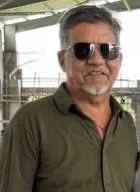
Meet Sachin Karnik: A Storyteller Driven by Curiosity
You started writing relatively late in life. How did your journey as an author begin?
I have always been a storyteller by nature and a voracious reader. I have enjoyed reading and getting lost in stories for as long as I can remember. But writing came quite late in my life, after I retired from my professional service.
Retirement gave me the time and opportunity to explore this side of myself. I started putting the stories and ideas that came to my mind on paper. What started as something new gradually became a passion. I guess I had always been a storyteller; I just discovered writing much later!
You explore quite different subjects in your books. What interests you most when it comes to developing a story?
Basically, I am a very curious person. I am always interested in knowing about things that I don't know or understand. I like to dive into the unknown and explore it.
I am particularly fascinated by the human mind, human behaviour, emotions and relationships. I often wonder why two people react differently when faced with similar situations. This curiosity has found its way into some of my stories.
But I also enjoy exploring subjects that are entirely different. For me, a story can begin with almost anything that catches my attention.
You have mentioned that curiosity plays an important role in your writing. How does an idea eventually become a story?
Quite often, it starts with a question or something that fascinates me. I begin researching the subject because I want to know more about it. And as I get deeper into it, another question starts forming in my mind: "What if?"
That is usually where the story begins. Once the basic idea takes shape, the characters and the plot gradually develop. Sometimes, the story takes a direction that I had not initially thought of. I enjoy that part of writing too. It is like discovering the story as I write it.
our book The Roar Within explores childhood experiences and their influence on adult emotions and relationships. What made you choose this subject?
I have always been intrigued by how the human mind works. Our childhood experiences, the situations we go through and the way we perceive them can leave lasting impressions on us.
What fascinated me was how these experiences can influence our emotions and relationships much later in life. Something that happens during childhood may seem insignificant at that time, but its impact can remain with us as we grow older.
This curiosity became the starting point for The Roar Within. I wanted to explore how the mind deals with such experiences and how they can shape the way we relate to others.
Your series World of Silence & Echoes moves into a very different territory, with reincarnation and parallel worlds. How did this idea come about?
This idea came from my curiosity about reincarnation, destiny and the possibilities of parallel worlds.
The series has two parts. The first, The Vow Rewritten, moves between two completely different periods: the Maratha age and modern times. It revolves around a Maratha Sardar whose intense determination to fulfil his vow leads to his reincarnation in the present day.
The two periods are connected through several mysterious elements. There are inscriptions and spirals that conceal details of the past, soul verses that have been carried down through the ages, and keepers of memory who have been entrusted with preserving these stories until the time comes for them to be told. There is also an age-old black stallion that guides the young man in modern times. All these elements gradually bring the two periods together.
The second part, Where Worlds Part, takes the story into a parallel world. The same story has unfolded there too, and the vow is fulfilled there as well. But there is another version of the same person in that world. Although both versions are the same person in different worlds, they make different choices. One of them becomes materialistic, and these differences in their choices have consequences in both worlds.
I found the idea of two versions of the same person, living in different worlds and making different choices, quite fascinating. That became the basis of the series.
In Out of Sequence, the central character is accused of a crime he cannot remember committing. What interested you about this particular premise?
I have always found memory and recollection quite intriguing. We tend to believe that our memories are reliable, but what happens when there are gaps in them?
In Out of Sequence, the protagonist is accused of a crime, but he cannot remember committing it. He can remember the crime scene, but not the exact moment when the crime happened. This creates a situation where he himself is uncertain about what might have happened.
I found this idea interesting because it brings memory, recollection and uncertainty into the centre of the story. It also gave me an opportunity to explore how a person deals with a situation where he cannot completely trust his own memory.
Your forthcoming book, 72 Hours, is a modern-day techno-thriller. What can you tell us about it?
72 Hours is quite different from my earlier books. It is a modern-day thriller involving an IT professional, a system architect and a powerful corporate group known as the Circle.
The story has two separate 72-hour deadlines. In the first, an IT professional receives a refurbished mobile phone and a warning that saves him from a planned railway accident. Following a series of clues, he eventually meets a system architect who happens to look exactly like him. There is no other connection between the two.
The architect had originally designed a system for the Circle, but the company later modified it to gain control over important systems. When he discovers their plans, including the railway accident, he goes into hiding. Before doing so, he makes sure that the IT professional gets the refurbished phone and is warned about the train.
After the IT professional finds him, the Circle tracks the phone and kidnaps the IT professional. This begins the second 72-hour countdown. The Circle needs the architect because it has a much bigger plan: to disrupt communication, information and logistics systems and bring India's financial capital to a standstill. The idea is to create a crisis and then make money by providing solutions to it.
The IT professional learns the intricate codes of the system, and eventually, with the architect's help and the investigating police inspector, they manage to foil the plan.
There is quite a bit happening in this story, and I have tried to keep the technical aspects understandable without getting into too many details.
Your books involve subjects that sometimes require considerable research. How do you approach research, especially when the subject is outside your professional background?
I enjoy researching. In fact, once something catches my interest, I tend to go quite deep into it.
For example, I do not come from an IT background. But for 72 Hours, I researched the subject extensively to understand how the plot could work and whether the events I had imagined were technically plausible.
I don't necessarily want to explain all the technical details to the reader. My purpose is to understand the subject well enough to make the story believable. The reader should be able to follow and enjoy the story without having to understand the technicalities behind it.
Your books touch upon several interesting and sometimes complex subjects. Do you expect readers to look for deeper meanings in your stories?
Not really! My stories are fiction, formed in my mind. I may explore a subject in depth and do a lot of research to make the story sound authentic, but I cannot insist that my readers should think as deeply about it as I do.
I am not here to teach philosophy or tell people how they should think. For me, fiction is meant to be enjoyed. I want readers to get involved in the story, enjoy the characters and be curious about what happens next.
If someone finds a deeper meaning in a story, that's fine. But I leave that to the reader. I don't want to impose any particular interpretation on them.
What can readers expect from you in the future? Do you have more stories waiting to be told?
I don't think my curiosity is going to end anytime soon! There are always so many things to explore, and quite often, one question leads to another.
I don't usually sit down with a fixed plan to write a particular kind of book. When something interests me, I start exploring it. If a "what if?" takes shape in my mind, it may eventually become a story.
I have enjoyed this journey of writing, especially because it has given me an opportunity to explore subjects that I might otherwise never have thought about. I hope to continue doing that and, in the process, give readers some interesting stories to enjoy.