“I know, but HISTORY does not record it.”
Mehmet Fatih Öztürk is a Turkish author whose work spans historical fiction, espionage, biography, poetry, and novels inspired by real events. At the heart of his writing are often the people who remain behind history’s grand narratives: the witnesses to events, the choices they make, their loyalties, fears, sacrifices, and the memories that do not always find their way into the official record.
Born in Bursa in 1964, Öztürk studied History at Istanbul University’s Faculty of Letters. His university years were more than a period of academic study. He performed in theatre and had the opportunity to meet and spend time with some of the prominent poets and writers of the period. These encounters allowed him to experience literature not merely as something to be read, but as a living and creative world, and played an important role in the development of his own writing.
Throughout his professional life, he worked across a range of interconnected fields including literature, theatre, culture, the arts, publishing, and sport. He spent four years as a theatre organizer and also served in the management of a professional football club. He later worked for many years as a cultural center director within Bursa Metropolitan Municipality. During this period, he conceived, planned, directed, and brought to life numerous literary, cultural, and artistic projects from their earliest stages through to their realization.
His education in history, experience on the stage, work in cultural management, and exposure to different social environments gradually became some of the central sources of his writing. Theatre gave him a strong sense of scene, character, and dialogue; history taught him to look for the causes behind events; and his work in culture and the arts gave him the opportunity to observe different people, lives, and ways of thinking at close range.
Öztürk’s novels and biographical works are often grounded in historical research, archival documents, eyewitness testimony, and documented real events. Rather than treating history merely as a chronology of dates, wars, and political developments, he turns his attention to the people living inside those events. For him, history is not only the story of what happened, but also of what people did, what they believed, what they were willing to risk, and what they left behind.
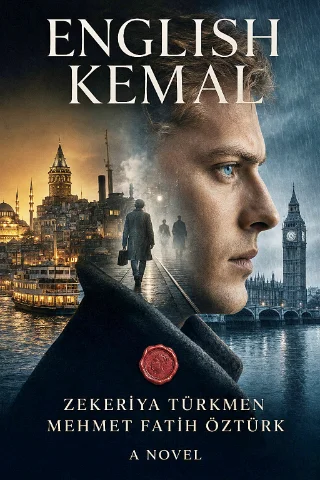
His works include English Kemal, which tells the extraordinary story of Turkish intelligence operative Ahmet Esat Bey; DM 357, centered on the 1992 missile strike on the Turkish destroyer TCG Muavenet during a NATO exercise; Mehmet Âkif, a biographical novel portraying the life of Mehmet Âkif Ersoy through a literary narrative; 1974 Fortress, which explores Cyprus and the historical developments surrounding 1974 through human stories; as well as Precipice, Stallion of the Wind, One of My Two Eyes, and the poetry collection In the Moonlight.
Across his novels, biographies, and poetry, Öztürk repeatedly returns to the themes of memory, identity, loyalty, conscience, sacrifice, and the human lives that remain in the shadow of major historical events.
Because sometimes an event enters history, while the story of the person who lived through it does not.

About Mehmet Fatih Öztürk
Author Profile
Full Name
Mehmet Fatih Öztürk
Gender
male
Languages
Turkish
Timezone
UTC
City
Bursa
Country
Turkey
In Our Collection
1
Books
0
Articles
1 book by Mehmet Fatih Öztürk
0 articles by Mehmet Fatih Öztürk
📭
No articles have been published by this author yet.
0 interviews by Mehmet Fatih Öztürk
No author interviews are available yet.
Authors in the same genre or writing style as Mehmet Fatih Öztürk.