
Meet Carmen Lea: I DIDN'T SET OUT TO BECOME A SELF-HELP AUTHOR
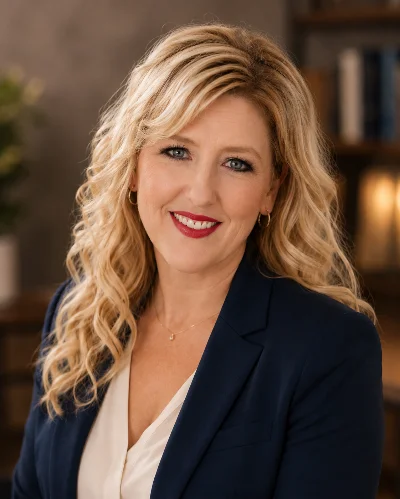
What inspired You didn't set out to become a self-help author. So what happened that made you realize your story could actually help someone else change theirs?you to start writing?
I actually started writing Unshattered, my memoir so to speak, when I was a teenager. I didn't publish it until 2025.
For years, writing was something I did for me. It helped me analyze my pain instead of just carrying it. Writing gave me a way to pull things apart, look at them differently, release some of what I was holding onto and become more aware of how my experiences had shaped me.
I wasn't writing because I thought I had answers for anyone else. I was trying to understand myself.
Then I published Unshattered.
At my first book launch, readers were hugging me and thanking me for writing it. Then the reviews started coming in. People told me they felt seen. They recognized themselves in my words. Some even told me the book had changed their lives.
That changed mine.
I realized that something I had originally written to help me understand my own pain could help someone else understand theirs.
For a long time, I had wondered what possible purpose there could be in some of the things I'd been through. I think my readers answered that question for me.
My pain became my story. My readers gave that story purpose.
That's what inspired me to keep writing, move into coaching, and create books that don't just tell people what I've learned, but help them discover something about themselves.
I didn't set out to become a self-help author.
I set out to understand myself.
Somewhere along the way, that started helping other people understand themselves too.
For years, your writing was private. Was there one moment when someone made you think, Maybe this isn't supposed to stay private anymore?
For years, your writing was private. Was there one moment when someone made you think, “Maybe this isn't supposed to stay private anymore”?
Yes. It started with a poem called Fickle Bitch.
The words had been buzzing around in my head for a long time. I was trying to describe what depression actually felt like to me, because it wasn't what people saw from the outside.
I call it being functioning depressed.
On the outside, I could be confident, energetic, driven and capable. People admired those things about me. I could work, solve problems, help other people and get things done.
Meanwhile, on the inside, there were times I wanted to crawl into a hole and hide from the world. I didn't want to leave my bed. The emotional pain could become so intense that it almost felt physical.
There were highs and lows, and most people had absolutely no idea.
Eventually all of those thoughts became Fickle Bitch.
I shared the poem with my friend Amber, and her reaction caught me completely off guard. She didn't just tell me it was good. She felt it. She became emotional and told me, “The world needs this. You have to publish it.”
That stayed with me.
Because suddenly someone else understood something I had struggled to put into words for years.
It made me wonder how many other people were walking around looking perfectly fine while fighting something nobody else could see.
Maybe someone needed to hear what I had written.
Maybe they needed to know somebody else understood.
That poem became one of the first real steps toward publishing Unshattered.
I had spent years using writing to understand myself.
Amber was the first person who made me realize my words might help someone else feel understood too.
Amber told you, “The world needs this.” What happened when Unshattered finally reached readers and you discovered she might have been right?
Amber told you, “The world needs this.” What happened when Unshattered finally reached readers and you discovered she might have been right?
I held an in-person book launch and signing locally, and I don't think I was prepared for what happened afterward.
People didn't just buy the book and go home.
They came back.
Some ordered four more copies because, after reading it, they immediately thought of friends who needed it too. People hugged me. Someone sent me flowers. Then the reviews started coming in.
Different people. Different lives. But I kept hearing versions of the same things:
“I felt this.”
“I feel seen.”
“This could have been my story.”
“You changed my life.”
And it didn't stop after the book launch.
I've been stopped in public. I get random text messages. People message me through social media just to tell me what the book meant to them or what it made them recognize in themselves.
I still cry.
Every. Damn. Time.
Because Unshattered started as something I wrote to help me understand and process my own life. I couldn't have predicted that one day a stranger would hug me because those same words helped them understand something about theirs.
Every review, message, hug and person who comes back because they know somebody else who needs the book feels like another gentle nudge from the universe:
Keep going.
Keep writing.
Get this book into more hands.
Because apparently, it helps people.
And at the end of the day, that's what matters to me.
Who needs Unshattered most, and what do you hope they discover about themselves while reading your story?
Who needs Unshattered most, and what do you hope they discover about themselves while reading your story?
I've learned not to decide who needs Unshattered.
Somehow, the book seems to find people when they need it.
Sometimes it's the person who buys it. Sometimes they read it and immediately think of a friend or family member. I've had people tell me, “I had a great childhood, but my friend is really going through something right now. I'm giving her your book.”
Some people buy multiple copies. Others read their copy and pass it on.
And sometimes I don't even know where the book has travelled until somebody finds me.
I was walking through the mall once when a young woman tapped me on the shoulder and said, “I read your book. Thank you for writing it.”
Another young woman borrowed Unshattered from a small-town library. Later, she found me on Instagram and reached out. My book had simply been part of her summer reading list, but somehow those pages created a connection between two people who had never met.
Those moments have taught me something.
I don't think you need to have lived my life to find yourself somewhere inside Unshattered.
You don't need my childhood. My relationships. My mistakes. My pain.
You just need to be human.
Maybe you're carrying something. Maybe you're trying to understand yourself. Maybe you're rebuilding. Maybe you're doing perfectly well, but someone you love isn't.
So who needs Unshattered?
Maybe you do. Maybe someone you love does.
I've stopped trying to decide.
I just keep putting it into the world and trusting that somehow, it keeps finding its way into the right hands.
You've been bullied, but you've also admitted that you've been the bully. What did experiencing both sides teach you about judgment, kindness and the way we treat people when we have no idea what they're carrying?
You've been bullied, but you've also admitted that you've been the bully. What did experiencing both sides teach you about judgment, kindness and the way we treat people when we have no idea what they're carrying?
If you can imagine the perfect recipe for getting bullied as a kid, I had most of the ingredients.
I was raised primarily by my father, a man who had very little respect for women. We moved constantly, so I was always the new kid. I was overweight for most of my childhood. My dad cut my hair with a bowl, makeup wasn't allowed, and while other kids were wearing the latest fashions, I was often in sweats or thrift-store clothes that looked like they belonged to someone's grandmother.
And kids can be cruel.
I was called Bessie the Cow, fat bitch, weirdo and plenty of other things I've probably chosen to forget.
Then high school came. I lost weight. I grew my hair out. Suddenly I had an opportunity to stop being the target.
So I made somebody else one.
I bullied a girl who was supposed to be my friend because taking the attention off myself felt safer than having it directed at me.
What happened wasn't harmless teenage drama. She eventually changed schools, and her family moved away.
I have to live with knowing I contributed to another human being hurting that badly.
And I hate that I did it.
Before high school ended, I made a decision about the kind of person I wanted to be: I would never intentionally hurt another person just to make myself feel better.
That decision became one of the foundations I still stand on today.
Kindness. Always.
Oddly enough, my experiences have even given me empathy for bullies.
“Hurt people hurt people” doesn't excuse cruelty. I know that because I've been on both sides of it. But it can help us understand where cruelty comes from.
Now, when someone lashes out at me, my analytical brain kicks in. Instead of immediately asking, What's wrong with me?, I try to ask, What is happening inside them that makes hurting another person feel necessary right now?
Their behaviour belongs to them.
Their opinion of me belongs to them.
I don't have to pick it up and carry it as my shame.
I can't make someone like me. I can't control what they think about me.
But I can control the person I choose to be in response.
And that is a freedom I wish I'd understood much earlier.
Many of us spend years trying to be liked, accepted or validated by other people. What finally taught you that validation has to come from within, and what changes when you stop handing other people the power to decide your worth?
Many of us spend years trying to be liked, accepted or validated by other people. What finally taught you that validation has to come from within, and what changes when you stop handing other people the power to decide your worth?
For most of my childhood, I was looking for love and validation from my parents, especially my dad.
My father wasn't someone who gave hugs, praise or said “I love you.” As a kid, I didn't analyze that and think, Perhaps my father has his own emotional limitations.
I thought, What's wrong with me? Why doesn't he love me? Why am I never enough?
When you grow up believing love is something you have to earn, you can carry that lesson into adulthood without even realizing it. I certainly did. I looked for love and validation in other people, including relationships that were toxic and sometimes abusive.
But the first seed of something different was planted when I was still in school.
My aunt talked to me about self-esteem and even gave me a book about it. Then my guidance counsellor, Mr. Osbourne, said something incredibly simple to me.
I wanted to graduate, and he essentially told me: Then do it for you. Not for your dad.
That was huge.
I became a peer tutor. I worked toward graduating. And for perhaps the first time, I was pursuing something because I wanted it.
That was my introduction to self-love.
It took many more years and a custody battle involving my daughter before another piece really clicked. I kept coming back to the Serenity Prayer, but eventually I interpreted its lesson in a way that changed how I live:
I cannot control another person's thoughts, feelings, actions or opinions.
Read that again, because damn, is it freeing.
People can misunderstand me. Judge me. Make accusations about me. Think they're better than me. Decide they don't like me.
I can't control any of it.
But here's the part I can control:
Do I like me?
And these days?
Yeah. I do.
I think I'm pretty cool.
That doesn't mean I think I'm perfect. Far from it. It means my worth isn't up for a public vote anymore.
When you stop asking everyone else for permission to feel good about yourself, you get an incredible amount of your life back.
Validation from other people feels good. Validation from yourself feels like freedom.
Forgiveness can sound like we're saying what someone did to us was okay. You learned that it means something very different. What does forgiveness actually mean to you, and why did learning to forgive become such an important part of becoming Unshattered?
Forgiveness can sound like we're saying what someone did to us was okay. You learned that it means something very different. What does forgiveness actually mean to you, and why did learning to forgive become such an important part of becoming Unshattered?
I used to watch Oprah and other daytime talk shows because, quite frankly, some of the stories made my life seem not so bad.
Then one day Oprah had Truddi Chase on her show.
That episode hit me deeply, but there was something Oprah said about forgiveness that stayed with me. She described forgiveness as:
“Giving up the hope that the past could have been any different.”
Read that again.
Seriously. Let it sink in.
I did.
I analyzed it. Chewed on it. Dissected it. Probably overthought it, because apparently I've been doing research for my future books my entire life.
And slowly, it began changing the way I thought about my past.
Forgiveness didn't mean what happened was okay.
It didn't mean the person who hurt me suddenly deserved my trust, access to my life or freedom from consequences.
It meant accepting one incredibly difficult fact:
I cannot change what already happened.
So now what?
That's the question that changed things for me.
When something terrible happens, you usually didn't ask for it. You didn't choose it. You may not have deserved it.
But it happened.
Now you have another choice.
How much more of your life are you going to allow it to take?
For me, forgiveness became less about releasing another person from responsibility and more about releasing myself from having to keep reliving something I could never go back and change.
Look at the past.
Feel what it did to you.
Face what happened.
And then, when you're ready, stop giving it power it doesn't deserve anymore.
Feel it. Face it. Release it.
You cannot rewrite yesterday.
But you can decide how much of tomorrow you're willing to give it.
You say forgiveness deals with what already happened, but letting go is about what we keep carrying. What are we holding onto that we need to put down, and how do we actually begin to let go?
You say forgiveness deals with what already happened, but letting go is about what we keep carrying. What are we holding onto that we need to put down, and how do we actually begin to let go?
For me, letting go doesn't mean I don't care.
It means it can't hurt me anymore.
Healing isn't linear. You're going to have good days and bad days. Something you thought you'd dealt with can suddenly show up again and knock you flat.
The question I eventually learned to ask myself was: How much more of my life am I willing to give this?
You cannot control another person's thoughts, actions, feelings or opinions.
You can't make someone apologize. You can't make them understand your side. You can't make them like you, treat you fairly, stop talking about you or become the person you wish they were.
Trying to control any of that is exhausting.
So let them.
Let them think it.
Let them say it.
Let them leave.
And then bring your attention back to the one person you actually have some control over: you.
That doesn't mean suppressing your emotions. Quite the opposite.
Feel sad. Feel angry. Cry. Stay in bed for a day if that's what you need. Healing isn't pretending everything is wonderful while secretly falling apart.
Feel your feelings. But don't build your permanent address there.
Feel them. Face them. Then decide what you're going to do next.
For me, that means trying to look forward instead of constantly looking backward. It means boundaries. Saying no when I don't have the time or energy. Walking away from relationships that continually drain me. Protecting my peace without feeling guilty for it.
And it means living according to my values.
I like who I am.
I've made conscious choices about the person I want to be. I choose not to lie. I choose not to gossip. I choose not to intentionally hurt people. I choose kindness. I choose to put more kindness into the world whenever I can.
Those are things I can control.
Most days, I choose joy.
Some days I choose sweatpants, sadness and staying in bed.
That's okay too.
But eventually, I choose myself again.
That's what letting go means to me. You stop giving everything outside of you control over everything inside of you.
You call Unshattered a memoir “so to speak,” because it doesn't stay a traditional memoir for very long. What happens to the reader as your story becomes a guide for examining their own?
You call Unshattered a memoir “so to speak,” because it doesn't stay a traditional memoir for very long. What happens to the reader as your story becomes a guide for examining their own?
Unshattered is my story, but I've never quite known what genre box to put it in.
It begins as a memoir told largely through poetry. I take you through the people I met, the experiences that shaped me, the pain I carried and the questions I eventually had to ask myself.
Who am I?
Why do I think this way?
Why am I still carrying this?
Who do I want to become?
As my story moves forward, so does my healing. I begin learning about self-esteem, self-love, forgiveness, letting go and what it actually means to live from within instead of constantly looking outside yourself for validation.
And somewhere along the way, something strange happens.
The book stops being only about me.
You're still walking through my story, but suddenly you're thinking about yours.
Maybe something I experienced reminds you of something you've buried. Maybe one of my realizations makes you question a belief you've carried for years. Maybe you recognize yourself in a pattern, a relationship, a feeling or even a mistake.
It starts to feel less like you're reading about my journey and more like we're walking through it together.
That's where Unshattered accidentally became self-help.
I didn't sit down with a ten-step program and decide I was going to teach anyone how to live. I simply documented what I experienced, what I questioned, what I learned and how I began changing.
Then readers started taking those lessons and applying them to their own lives.
That's the part I still find incredible.
I wrote to release some of my pain. Somehow, readers walking through my journey began releasing some of theirs.
My story makes them think about their story.
My questions become their questions.
My journey becomes a mirror for theirs.
I never planned that.
But I think that's where the magic of Unshattered lives.
You wrote Unshattered to release your own pain. Your readers gave that pain purpose. Now that you know your words can reach someone who may be struggling quietly, what do you want to put back into the world through everything you write next?
You wrote Unshattered to release your own pain. Your readers gave that pain purpose. Now that you know your words can reach someone who may be struggling quietly, what do you want to put back into the world through everything you write next?
Unshattered changed what writing means to me.
Since then, I've written Bloom Through the Cracks and Overthinking Is Exhausting. I've written about dealing with bullies, self-love and some of the things we humans do that make our already complicated lives even harder.
And I'm nowhere near finished.
There are so many very specific things I've lived that I want to write about: divorce, raising children, ADHD, relationships, weight loss, overthinking, rebuilding, self-esteem and probably a few things I haven't screwed up yet.
Give me time.
But I'm not interested in writing textbooks.
I'm going to keep writing the way I talk and the way I think: real experiences, practical tools, questions, tips, humour, sarcasm and the occasional uncomfortable truth.
Because underneath all those different subjects is really the same message:
Learn to live from within.
Know who you are. Like who you are. Understand that you cannot control everybody else's thoughts, feelings, actions or opinions. Decide what you stand for. Make your choices accordingly.
And be kind.
We live in a world where it's incredibly easy to tear somebody apart from behind a screen. People judge complete strangers based on one photograph, one sentence, one mistake or one opinion.
We have no idea what the person on the other side of that screen is carrying.
Sometimes a smile matters.
A kind word matters.
Choosing not to pile on matters.
I want to keep putting more of that into the world.
Most of all, I want readers to understand that we are not as alone as we sometimes think we are.
Different circumstances. Different stories. Different scars.
But we're all trying to figure out who we are, where we belong, what our purpose might be and how we're going to respond to whatever life hands us next.
I can't make those choices for anyone.
What I can do is keep putting my experiences on paper, sharing what I've learned and offering a few tools for the road.
Then maybe the same magic that happened with Unshattered keeps happening.
Someone reads something I wrote and thinks:
“I thought it was just me.”
And somewhere in those pages, they realize it isn't.
If my writing can keep doing that, I'll keep writing.