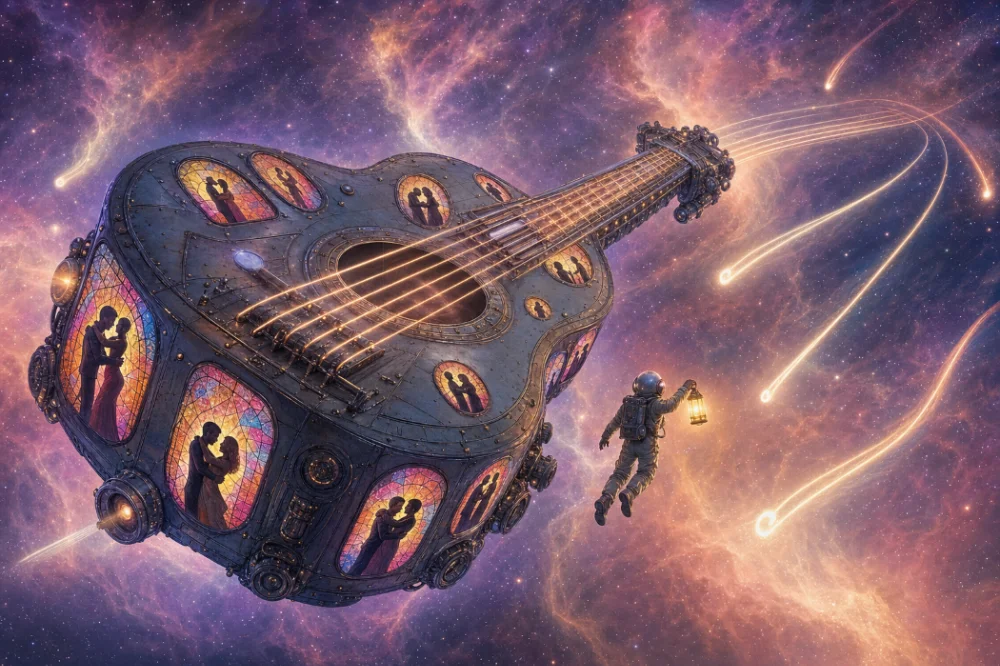
There is something undeniable about the scale of a space opera. The genre invites us to dream of sprawling galactic empires, massive starship battles, and alien worlds that defy imagination. From classic adventures to contemporary epics, space opera has always been a beloved cornerstone of science fiction.
However, writing a modern space opera comes with a unique challenge. In a subgenre defined by hyper advanced technology, artificial intelligence, and interstellar politics, it is incredibly easy for the human element to get lost in the machinery.
The most successful space operas succeed because they understand a fundamental truth. The tech is just the stage. The characters are the performance.
Here is how you can balance high tech worldbuilding with deep human emotion to write a space opera that resonates with modern readers.
1. Use Technology to Mirror Internal Conflicts
In great science fiction, technology is never just a collection of cool gadgets. It is a tool to explore the internal struggles, flaws, and desires of your characters.
Instead of spending paragraphs explaining the physics of your ship's faster than light drive, tie the technology to a character's emotional state. Perhaps the jumps through hyperspace cause intense psychological strain, forcing a stoic captain to confront their deepest regrets.
When your technology has an emotional or physical cost, it ceases to be dry worldbuilding. It becomes a catalyst for character growth and narrative tension.
2. Keep the Focus on Intimate Relationships
A space opera often deals with massive, galaxy altering stakes. Total planetary destruction, stellar wars, and cosmic collapses are common plot points. But to a reader, a billion casualties is just a statistic. One character losing their sister is a tragedy.
To keep your epic story grounded, always filter the macro stakes through a micro lens. Show how a political conflict between two star systems tears a found family of bounty hunters apart.
Let your characters have quiet moments in the galley of the ship. Let them argue over music, share meals, and grieve their losses. These small, intimate interactions provide the emotional anchor your reader needs to care about the fate of the galaxy.
3. Ground Your Tech in Sensory Details
The advanced technology in your world should feel lived in and real, rather than abstract and sterile. You can achieve this by focusing on how your characters experience the technology through their senses.
Avoid listing the data specifications of a cybernetic arm. Instead, describe the faint hum of the servos when the character gets nervous, or the cold sensation of the metal fingers against a loved one's cheek.
By anchoring your high tech concepts in universal sensory experiences, you make the futuristic setting feel instantly accessible and emotionally authentic to a human audience.
The Heart Inside the Machine
At its core, a modern space opera is not actually about the spaceships, the lasers, or the alien species. It is an exploration of human nature projected across the canvas of the cosmos.
When you prioritize the hearts of your characters over the specifications of your starships, you create a universe that feels truly infinite.