
Why Projects Fail — And Why AI Is Making Governance More Important, Not Less
Most projects don't fail because of bad planning documents. They fail because of what those documents don't show: the quiet shortcuts, the unspoken assumptions, the risk everyone privately noticed but no one raised in the steering committee.
After two decades of running and reviewing programmes, I've come to believe most project failure isn't a planning problem — it's a pattern-recognition problem. The same warning signs show up again and again, on completely different projects, across completely different industries. Scope creep dressed up as "stakeholder flexibility." A green status report sitting on top of a red risk log. A vendor delay that everyone calls "temporary" for the third month running. Experienced project managers learn to spot these patterns. Everyone else learns the hard way, one failed project at a time.
The New Variable: AI Is Changing the Shape of the Risk
There's a newer pattern now layered on top of the old ones. AI tools are being adopted inside projects faster than governance frameworks can keep up with them — teams using AI to draft requirements, generate code, summarize vendor contracts, or automate reporting, often without anyone formally assessing what that changes about accountability, data handling, or quality control.
This isn't a reason to slow AI adoption down. It's a reason to treat AI governance the same way mature PMOs treat any other emerging risk category: name it explicitly, assign ownership, and build it into existing stage gates rather than bolting it on afterward. A few things worth asking on any project using AI tools today:
- Who owns the output? If AI drafts a requirement, a test case, or a piece of code, who is accountable for verifying it before it ships?
- What data is it touching? AI tools often need context to be useful — make sure that context isn't sensitive client or product data leaving your controlled environment.
- Is speed hiding risk? AI-accelerated work can create an illusion of progress. A fast-drafted deliverable still needs the same review rigor as a slow one — arguably more, until the team has calibrated trust in the tool's output.
- Does your governance framework even mention this yet? Many PMOs are still running steering committee templates written before generative AI was a factor. If AI use isn't a visible line item in your risk register, it's an invisible one.
None of this is exotic. It's the same discipline that's always separated projects that recover from trouble and projects that quietly drift into failure: naming the risk early, in plain language, before it becomes a crisis slide in a postmortem.
Why I Wrote About This
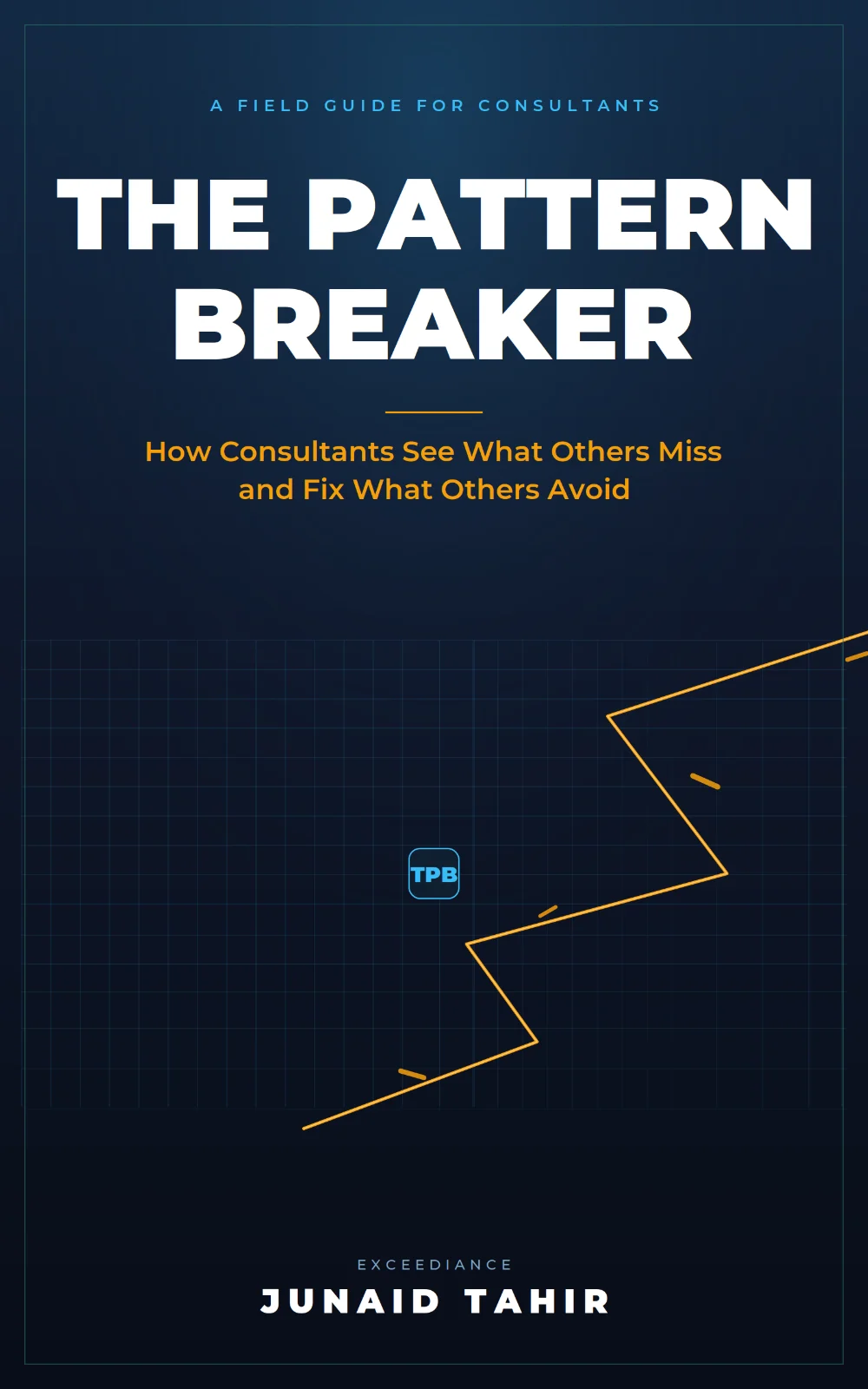
I wrote The Pattern Breaker because I kept seeing the same failure patterns repeat across very different projects, and I wanted to put language around them — the kind of language that lets a project manager or sponsor say "I recognize this" before it's too late to act. It's built around the patterns I've seen consultants and PMOs miss, and the small number of things that consistently separate the projects that recover from the ones that don't.
You can read more about the book here: The Pattern Breaker — Exceediance
Or get it directly on Kindle: The Pattern Breaker on Amazon
And if you'd like a free deep-dive article on project governance, PMO frameworks, or AI's impact on delivery — visit Exceediance.com, where I regularly publish on exactly these topics.
Junaid Tahir is a PMO governance practitioner and author of The Pattern Breaker: How Consultants See What Others Miss and Fix What Others Avoid.